- You can rent without a personal guarantor by using a professional guarantor service, showing strong income or savings, or finding a landlord who will look at your circumstances on an individual basis.
- Paying several months' rent upfront is no longer an option for most new private tenancies in England, as landlords can now only take a maximum of one month's rent in advance.
- If the landlord still wants a guarantor and nobody you know qualifies, Rentmigo can act as your guarantor once you're approved, for one fee covering up to three years at the same property.
You've found a place you like, you can afford the rent, and then the letting agent asks who your guarantor is. If there's nobody you can call upon, that one question can feel like it's about to cost you the property.
It doesn't have to. Plenty of people rent without a personal guarantor, either by showing the landlord other evidence that they can pay or by using a company that acts as their guarantor instead.
Friends and family often can't help here, even when they'd happily do it. Landlords usually want a guarantor who lives in the UK, earns enough to cover your rent and has a good UK credit history, which rules out parents who live overseas and many relatives who are retired or rent their own home.
Our guide on who can legally be a guarantor in the UK sets out the usual criteria.
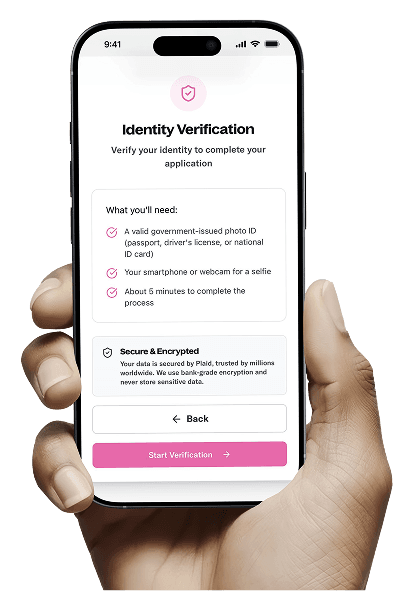
If you can't find a guarantor and that's the only thing missing from your application, Rentmigo may be able to act as yours. You can apply to Rentmigo online in about five to ten minutes, and if you're approved, we'll contact your landlord or letting agent for you.
Can you rent a property without a guarantor?
Yes, a guarantor is something a landlord or letting agent asks for as part of their own checks, not something the law says is compulsory for every tenancy.
Many tenants are never asked for one. You're more likely to be asked if you don't have a UK credit history, you're a student, you're self-employed, you earn your income overseas or you don't quite meet the agent's affordability checks.
For the legal side, our guide on whether landlords can legally ask for a guarantor explains what a landlord can and can't ask for.
Alternatives if you don't have a guarantor
The right alternative depends on why you've been asked for a guarantor. If the agent's worry is your credit history, more payslips may not change their mind, but if the worry is your income, evidence of savings might.
Pay a company to be your guarantor
A professional guarantor service is a company that becomes your guarantor for a fee, so you don't need to ask a friend or family member to take on that responsibility.
You apply online, the company checks whether you can afford the rent and, if it approves you, it agrees to cover the rent if you can't pay. The landlord gets the same kind of reassurance a personal guarantor would give them.
Here's how it works with Rentmigo:
- The online application normally takes five to ten minutes, and we can usually give you a decision within 24 hours.
- We run a soft credit check, which doesn't affect your credit score, and look at your wider ability to pay rather than relying only on a UK credit history.
- You can combine different sources of income, like as a salary, self-employment income, student loans, scholarships, family support and savings.
- You don't need to provide a personal guarantor or co-signer. Some applicants may be asked to nominate a Responsible Third Party, who provides financial evidence but isn't legally responsible for the rent.
- Once you're approved, we contact your landlord or letting agent and explain how our cover works.
The fee is between two weeks' and one month's share of the rent, depending on your application, and never more than one month's rent. You pay it once, and it covers up to three years from the start of your tenancy at that property. It becomes non-refundable once your tenancy starts and we've formally taken on the role of your guarantor.
Check two things before you pay any guarantor company. First, your landlord has to accept a professional guarantor, and not every landlord does, so ask before you apply. Second, if a guarantor company pays rent on your behalf, you'll normally still owe that money back to them.
Our guides on how online guarantor services work and how much a rent guarantor service costs go into more detail.
If you're comparing companies, these questions to ask before choosing a guarantor company will help.
Show strong proof of income or savings
Some landlords will accept strong finances instead of a guarantor, especially if they're looking at your application themselves rather than through an agent.
Have these ready before you apply:
- An employment contract or offer letter showing your salary
- Recent payslips
- Bank statements showing your income or savings
- Evidence of student funding, such as a loan, scholarship or bursary
- References from previous landlords
Many agents run an affordability check, which compares your income with the rent.
As a hypothetical example, if the rent is £1,200 a month and the agent uses a multiple of 30, they may want to see annual income of £36,000. Different agents and referencing companies use different multiples, so ask which one applies to you.
The limit is that many letting agents follow fixed referencing rules. You can have plenty of money and still be asked for a guarantor if your income is new, irregular or earned overseas.
Our guide on renting in the UK without proof of income covers what to do if your income doesn't fit the usual checks.
Offer rent in advance, within the rules
Rent in advance means paying some of your rent before it's due. It isn't the same as a tenancy deposit, which is money held to cover damage or unpaid rent and returned at the end of your tenancy if nothing is owed.
For years, paying six or twelve months upfront was a common way round the guarantor question. For most new private tenancies in England, that's no longer possible, and the rules differ across the UK:
- England: From 1 May 2026, for assured periodic tenancies, a landlord or agent can't ask for or accept rent before the tenancy agreement is signed. After signing, they can take a maximum of one month's rent in advance before the tenancy starts.
- Student accommodation: Some accommodation outside the assured tenancy system, including purpose-built student accommodation, is not subject to the new one-month limit. Ordinary student lets from private landlords generally are covered by it.
- Scotland: Landlords can ask for up to six months' rent in advance, with a few restrictions.
- Northern Ireland: One month's rent in advance is common, and tenancy deposits are capped at one month's rent.
Even where it's allowed, paying a big sum to the landlord upfront ties up money you may need for your deposit, bills and moving costs. Our guide on whether paying six months upfront is better than using a guarantor compares the two in more detail.
Ask a private landlord to look at your circumstances
Landlords who manage their own properties sometimes have more freedom than letting agents with set referencing rules. If you explain your situation and show you can pay, some will agree to go ahead without a guarantor.
Renting a room directly from a private landlord may sometimes involve a less formal application process. Checks still vary from landlord to landlord, though, and there's no guarantee referencing will be lighter.
This route depends on finding the right landlord, which can take time when other people want the same property.
Use references and your rental history
If you've rented before, even outside the UK, a reference from a previous landlord shows you paid on time and looked after the home. A letter from your employer confirming your role and salary can help too.
Both strengthen an application, but landlords rarely accept them on their own as a full replacement for a guarantor.
Check university, employer or council support
Some universities run guarantor schemes for students, so ask your accommodation office what's available. Places can be limited, and a scheme may only cover certain properties.
Some councils offer help like deposit schemes or rent guarantees. These are usually aimed at people at risk of homelessness, and eligibility varies from council to council.
Which alternative is most likely to work for you?
The option most likely to work for you depends on why the agent wants a guarantor in the first place. Find your situation below, then read the linked guide for the detail.
If you're an international student, a professional guarantor is usually the most realistic option. Paying rent in advance may also be possible if your student accommodation qualifies. Our page on rent guarantors for international students covers this in more detail.
If you're moving to the UK for work, a professional guarantor backed by a letter from your employer is often the quickest route. See our page on rent guarantors for expat workers.
If you're paid from overseas, look for a professional guarantor that can assess foreign income. Our guide to renting with a foreign income explains your options.
If you're self-employed or freelance, your accounts and bank statements may be enough for some landlords, and a professional guarantor can help where they aren't. Read more about renting while self-employed.
If you don't have a UK credit history, a professional guarantor that looks beyond credit history is often the best fit. Our guide to renting without a UK credit history goes into this.
If you're living on savings, bank statements showing enough money to cover the tenancy can help. See our guide on renting without proof of income.
If you're renting for the first time, references from an employer or university can strengthen your application, or a professional guarantor can fill the gap. Our guide do you need a guarantor to rent in the UK? explains when you're likely to be asked for one.
How to rent without a guarantor, step by step
Sort out the guarantor question before you commit any money, so it can't hold things up at the last minute. This is the order to work in:
Ask what the agent actually needs: Find out whether they want a guarantor, why they want one and whether they accept professional guarantor services.
Get your documents together: That usually means ID, bank statements, proof of income or funding and any landlord references you have.
Arrange your guarantor early: If you're using a professional guarantor, apply as soon as you've found a property so the decision is ready when the landlord needs it.
Pay the holding deposit only when you're ready to go ahead: A holding deposit reserves the property while checks are carried out. In England and Wales it's capped at one week's rent, and it's separate from the tenancy deposit.
Sign the tenancy agreement and pay your tenancy deposit: In England, the tenancy deposit is capped at five weeks' rent if the annual rent is under £50,000, or six weeks' rent if it's £50,000 or more.
What to do if you've already found a property
Ask the agent today whether they accept professional guarantors, and don't pay a holding deposit or any guarantor fee until you know the answer.
If the agent is happy with the rest of your application and a guarantor is the only thing missing, Rentmigo may be able to fill that gap. Apply to Rentmigo online, add your landlord's or agent's details, and once you're approved we'll contact them to explain how our cover works.
Renting in London? Competition there changes things a little, so read our guide to renting in London without a guarantor.